


Why Large Power Inverters Spark When Connected to Batteries and How to Reduce the Risk
Large inverter systems do not usually fail at full load first. In many cases, the first problem shows up earlier, at the moment of battery connection. That is when buyers, installers, and project teams see the same thing: a sharp spark at the battery terminal when the inverter is connected for the first time.
When a large inverter is connected to a battery bank, the DC-side capacitors inside the inverter charge almost instantly. That initial charging event can pull a high inrush current for a very short moment, which creates a visible spark at the connection point.
The bigger the inverter, the higher the battery voltage, and the lower the battery system resistance, the more noticeable this event tends to be.
| Factor | Why It Increases Spark Risk |
| Larger inverter power | Larger DC-side capacitors usually create a stronger first charging event |
| Higher battery voltage | The initial connection event becomes more aggressive |
| Low-resistance battery systems | Current can rise very quickly at first contact |
| Repeated loose manual connection | More chance of visible arcing and terminal wear |
This is why the issue shows up most often in large off-grid inverter systems, heavy-duty backup power setups, high-power RV and mobile power systems, split phase installations, and lithium battery systems with fast current response.
Why This Matters for B2B Buyers
For distributors and project buyers, this is not just a technical footnote. It affects installation experience, perceived product quality, battery-side hardware wear, terminal and cable stress, and support questions after delivery.
If a customer installs a large inverter and sees a hard spark at first connection, the immediate assumption may be that something is wrong with the unit. If the supplier has not explained the cause clearly, that moment easily turns into a support case.
That is why this topic belongs in product education, not only in technical manuals.
Repeated uncontrolled connection can wear terminals and switches
How to Reduce the Risk
The practical goal is not to pretend the inrush event does not exist. The goal is to make the first connection more controlled.
| Practical Step | Why It Helps |
| Use a proper battery switch or DC breaker | Gives the installer more control over the connection event |
| Verify cable size and terminal tightness | Reduces avoidable resistance, heating, and unstable connection |
| Avoid repeated loose direct contact at the battery terminal | Helps reduce arcing and terminal damage |
| Use a controlled startup sequence | Makes commissioning more predictable |
| Use pre-charge practice in larger systems | Helps reduce the severity of the first inrush event |
For larger projects, many installers also use pre-charge methods to reduce the severity of the first capacitor-charging event before full connection is made. This is particularly relevant in high-power systems, where direct battery connection can feel much more aggressive than it does on a small inverter.
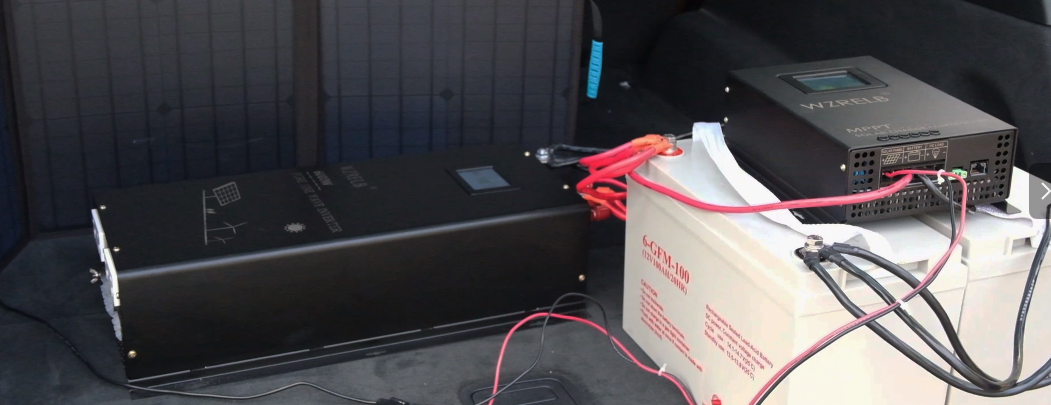
Where Reliable Fits in This Topic
Installation procedure comes first, but inverter design still plays an important role. A better inverter platform does not eliminate the need for proper battery connection practice, but it can support a more controlled system environment through features such as soft start, clear status display, proper protection functions, heavy-duty structure, and hardwire-friendly installation layout.
Based on the current Reliable product materials, several inverter series are relevant to this discussion.
| Series | Power Range | Relevant Confirmed Features | Why It Fits This Topic |
| RBH | 5000W-10000W | High-power pure sine wave, soft start, heavy-duty design, 4 AC outlets plus hardwire layout | Most directly aligned with large battery-based and high-load systems |
| RBP | 300W-5000W | Pure sine wave, LED display, soft start, remote optional, RS485 optional, common protection package | Good fit for mainstream pure sine wave projects that still need better commissioning discipline |
| SPT | 2.5KW-12KW | Split phase pure sine wave, touchscreen LCD, multiple outlets, hardwire terminal, soft start | Highly relevant for North American split phase backup and off-grid installations |
For larger battery-based projects, buyers should look beyond wattage alone and evaluate how the inverter platform supports safer commissioning and more stable daily use.


Final Thoughts
A spark at first battery connection does not automatically mean the inverter is defective. In large inverter systems, it is usually the visible result of DC-side capacitor charging and high inrush current at the moment of connection.
The right response is not to ignore it, but to manage it properly through better installation practice, better commissioning discipline, and better product selection.
For B2B buyers, this is where product education and platform choice start to matter. Reliable's RBH, RBP, and SPT series all fit naturally into this conversation because they are positioned for the kinds of power ranges and installation environments where startup behavior, soft start, and protection logic matter more.
FAQ
Q: Is A Spark When Connecting A Large Inverter To A Battery Normal?
A: In many cases, yes. It is commonly caused by the inverter's internal capacitors charging at the moment of battery connection.
Q: Does A Spark Mean The Inverter Is Defective?
A: Not necessarily. A visible spark at first connection is often a startup behavior issue rather than a product failure.
Q: Why Is The Spark Stronger On Large Inverter Systems?
A: Because larger inverters and larger battery banks tend to create a stronger inrush current event during DC-side connection.
Q: Is This More Common With Lithium Battery Systems?
A: It can be more noticeable in lithium-based systems because of their low internal resistance and fast current response.
Q: Can Soft Start Remove The Battery-Side Spark?
A: Soft start helps support smoother inverter operation, but proper battery connection practice is still required. It should not be treated as a complete replacement for controlled commissioning.
Q: Which Reliable Series Are Most Relevant To This Topic?
A: The most relevant series are RBH for high-power pure sine wave systems, RBP for more feature-oriented mainstream pure sine wave applications, and SPT for split phase systems.