

Battery Connection Procedure for Split Phase Pure Sine Wave Inverters
A correct battery connection ensures stable inverter output, reduces voltage drop, and helps avoid field failures caused by reverse polarity, loose terminals, or excessive inrush current.
This guide explains the recommended DC-side connection sequence for split phase inverters with 120VAC/240VAC output.
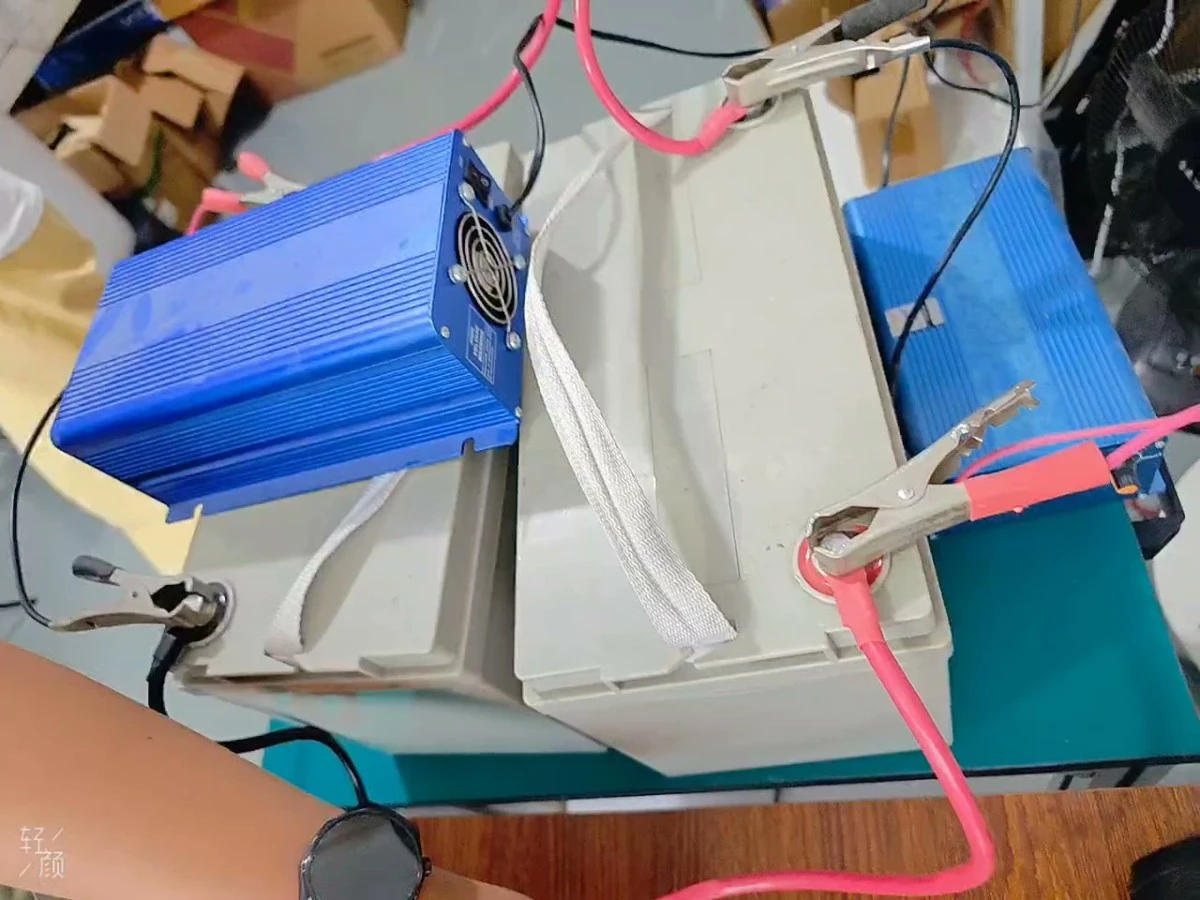
Step 1: Connect the Battery Side of the DC Cables
Start by connecting the DC cables to the battery or battery bank.
The red cable must be connected to battery positive. The black cable must be connected to battery negative. If multiple batteries are used, verify the final bank voltage before connecting it to the inverter.
Installers should not rely on cable color alone. Always confirm polarity with a meter before completing the inverter-side connection.
Step 2: Connect the Negative Cable to the Inverter
Connect the black negative cable to the black negative binding post on the inverter.
Tighten the terminal securely to minimize contact resistance. Loose DC terminals are a common cause of overheating, voltage drop, and unstable inverter performance in field installations.
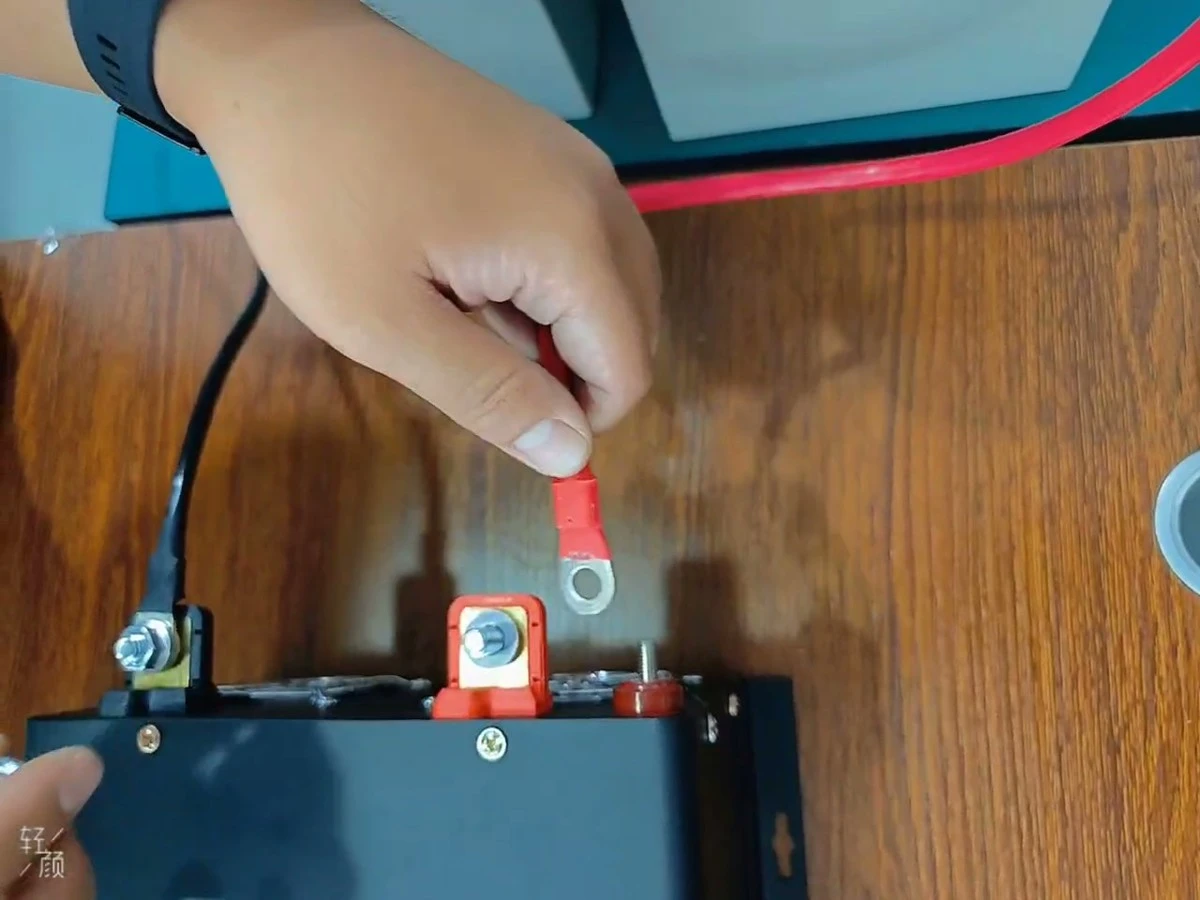
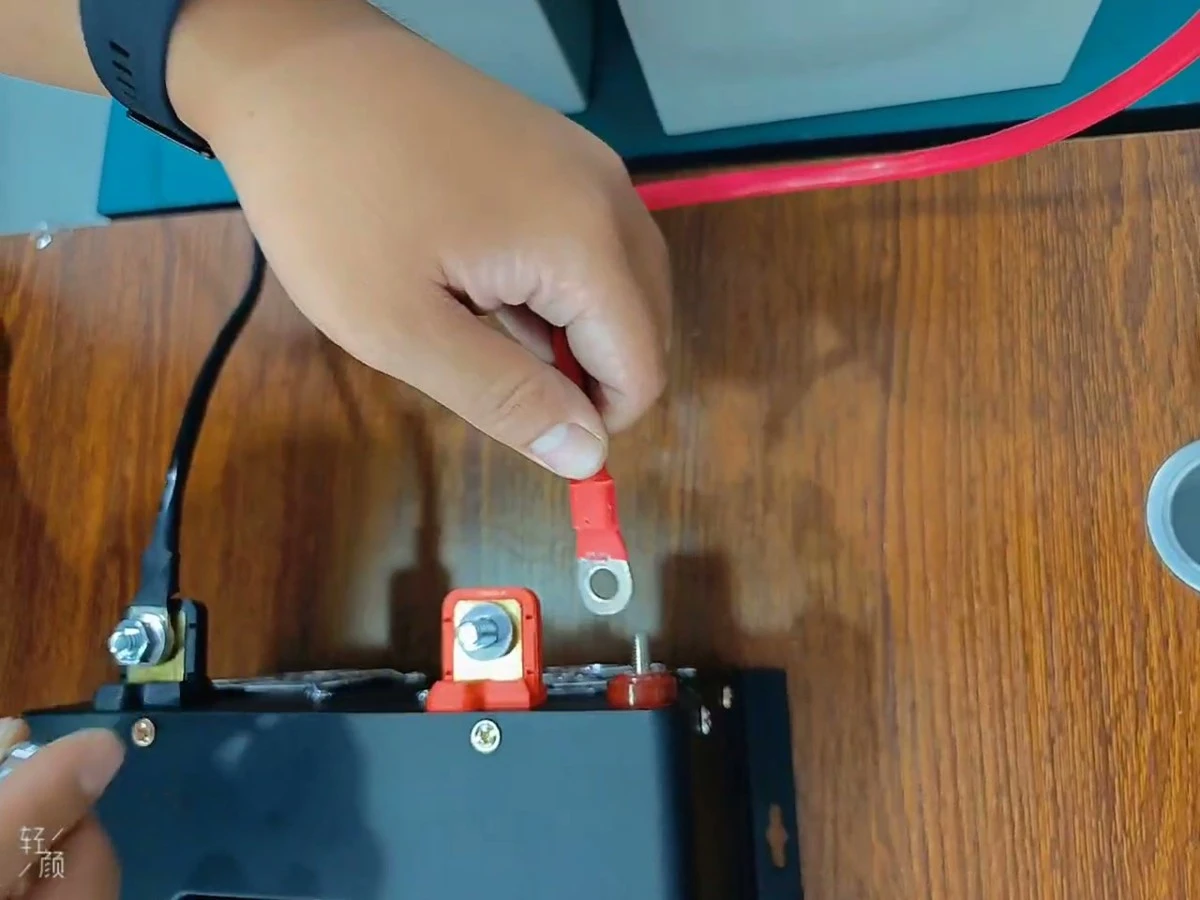
Step 3: Pre-Charge Through the Spark-Proof Nut
Before fixing the positive cable, touch the red positive cable to the spark-proof nut and hold it for 3-5 seconds.
This step allows the inverter's internal capacitors to begin charging before the final positive connection is made. It helps reduce the connection spark and improves installation safety, especially on higher-power inverter models.
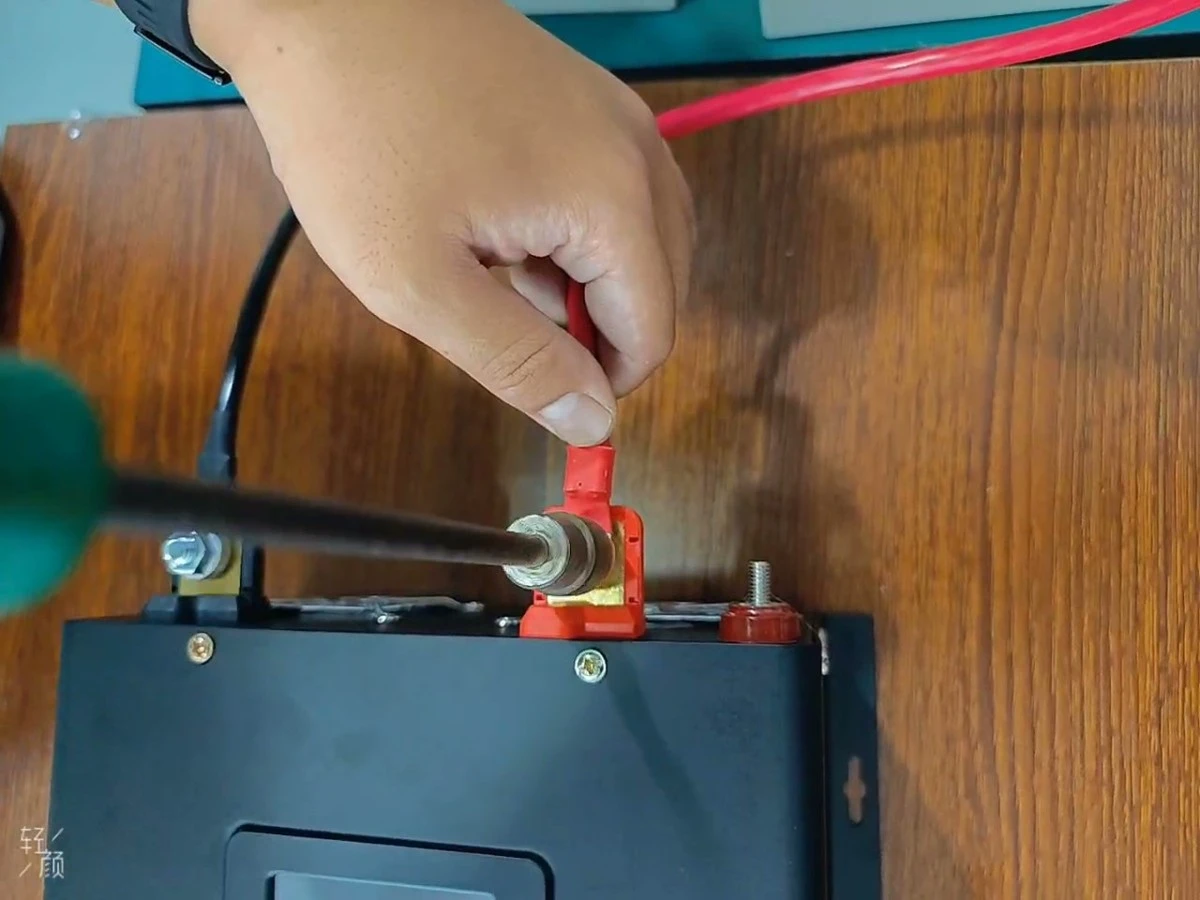
Step 4: Connect the Positive Cable to the Inverter
After the 3-5 second spark-proof contact, connect the red positive cable to the red positive binding post on the inverter.
Tighten the terminal firmly. Then perform a final inspection of the DC input wiring.
Installer Notes
Reverse polarity can blow the inverter's DC fuse and may cause permanent damage. This type of damage is typically not covered by warranty.
A small spark during first connection may be normal because the inverter contains large input capacitors. The spark-proof nut step is designed to reduce this inrush effect.
For continuous 24/7 operation, avoid running the inverter at full rated power for long periods. A practical design margin helps improve product reliability and customer satisfaction.
Why This Procedure Matters for B2B Customers
For wholesalers and system integrators, a clear battery connection procedure reduces after-sales issues. Many inverter failures reported as "no output" or "fault on arrival" are caused by incorrect polarity, loose terminals, wrong battery voltage, or unsuitable DC cables.
Providing installers and end users with a simple negative-first, spark-proof, positive-final procedure can reduce installation errors and improve product reputation in RV, marine, home backup, and off-grid power markets.