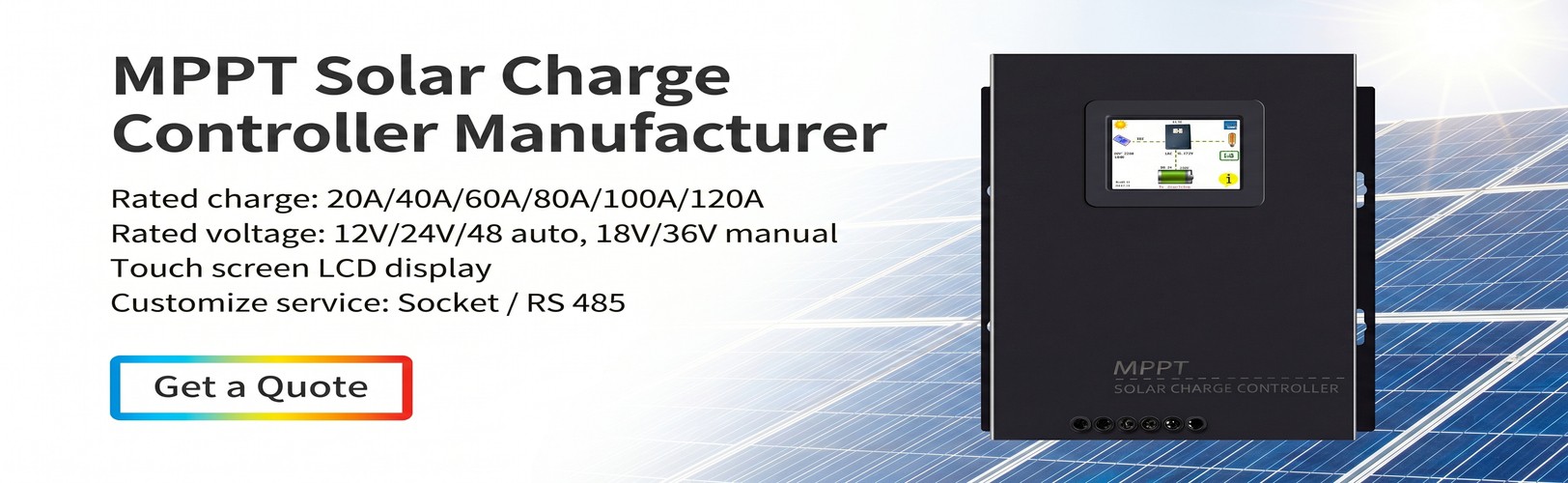
Q: What is the purpose of a solar charge controller?
A: The purpose of a solar charge controller is to regulate the voltage from solar panels to the battery bank to prevent overcharging and deep discharging, which can damage the batteries and reduce their lifespan.
Q: What are the two main types of solar charge controllers?
A: The two main types of solar charge controllers are PWM (Pulse Width Modulation) and MPPT (Maximum Power Point Tracking) controllers. PWM controllers are simpler and less expensive, while MPPT controllers are more advanced and efficient, particularly in scenarios where the solar panel's voltage is higher than the battery bank's voltage.
Q: How does a solar charge controller prevent overcharging?
A: A solar charge controller prevents overcharging by regulating the voltage from the solar panels to the battery bank. Once the batteries reach a certain voltage, the controller will reduce or cut off the current flow to prevent further charging.
Q: Can a solar charge controller prevent battery discharge?
A: Yes, a solar charge controller can prevent battery discharge by disconnecting the load from the batteries once they reach a certain voltage level. This ensures that the batteries do not discharge completely, which can damage them and reduce their lifespan.
Q: What are the benefits of using an MPPT solar charge controller?
A: The benefits of using an MPPT solar charge controller include increased efficiency, particularly in scenarios where the solar panel's voltage is higher than the battery bank's voltage; improved energy harvesting; and better performance in partially shaded conditions or when solar panels are operating at a voltage different from the battery bank.
Q: How does a PWM solar charge controller work?
A: A PWM solar charge controller works by turning the solar panel's supply to the battery on and off in rapid pulses, controlling the average voltage delivered to the battery. This prevents overcharging and deep discharging, but it is less efficient than MPPT controllers.
Q: What is the difference between an MPPT and a PWM solar charge controller?
A: The main difference between an MPPT and a PWM solar charge controller is efficiency. MPPT controllers are more efficient and can increase energy harvest by up to 30% compared to PWM controllers, particularly in scenarios where the solar panel's voltage is higher than the battery bank's voltage. Additionally, MPPT controllers offer better performance in partially shaded conditions or when solar panels are operating at a voltage different from the battery bank.
Q: How do I choose the right solar charge controller for my solar power system?
A: When choosing a solar charge controller for your solar power system, consider factors such as the size of your system, the type of batteries you are using, your budget constraints, and the efficiency you need. You should also consider the features offered by different controllers, such as digital display panels for monitoring system status, LED indicators and alarms, and remote monitoring options.
Q: What is the maximum power point tracking feature of an MPPT solar charge controller?
A: The maximum power point tracking (MPPT) feature of an MPPT solar charge controller is designed to maximize the amount of current flowing from the solar panels to the battery by continuously adjusting the voltage between the solar panels and the battery bank. This results in a more efficient charging process, particularly in scenarios where there is a large voltage difference between the panels and the batteries.
Q: Can I use a PWM solar charge controller with a lithium battery?
A: Yes, you can use a PWM solar charge controller with a lithium battery, but it is important to ensure that the controller is compatible with lithium batteries and that it has the appropriate charging profile to avoid damage to the battery.
Q: What are the advantages of using a solar charge controller with a digital display panel?
A: The advantages of using a solar charge controller with a digital display panel include real-time data on system performance such as battery charge level, current flow, and error codes, which can be invaluable for maintenance and troubleshooting. Additionally, digital controllers often provide remote access, enabling users to monitor and adjust settings from a distance, enhancing convenience and control.
Q: Can I connect multiple solar panels to a single solar charge controller?
A: Yes, you can connect multiple solar panels to a single solar charge controller, but it is important to ensure that the total voltage and current produced by the panels does not exceed the maximum rated voltage and current of the controller. Additionally, you should ensure that the panels are connected in parallel or series according to your specific requirements and the instructions provided by the manufacturer of the controller.
Q: What is the difference between a solar charge controller and an inverter?
A: A solar charge controller and an inverter serve different functions in a solar power system. A solar charge controller regulates the voltage from solar panels to prevent overcharging and deep discharging of the batteries, while an inverter converts DC power from the batteries into AC power that can be used to power appliances and devices. Therefore, both components are essential for a complete and functional solar power system.
Q: Can I use a solar charge controller with a wind turbine?
A: Yes, you can use a solar charge controller with a wind turbine to regulate the voltage and prevent overcharging and deep discharging of the batteries. However, it is important to ensure that the controller is compatible with the output characteristics of the wind turbine and that it has the appropriate charging profile to avoid damage to the battery bank.
Q: What is the lifespan of a solar charge controller?
A: The lifespan of a solar charge controller can vary depending on the quality, usage, and environmental conditions. Generally, a high-quality solar charge controller can last for 5-10 years or more with proper maintenance and care. Regular cleaning and inspection of the controller can help prolong its lifespan and ensure optimal performance.
Q: Can a solar charge controller be repaired if it stops working?
A: Repairing a solar charge controller depends on the nature of the problem and the complexity of the controller's design. Some issues may be resolved by replacing a component or resetting the controller, while others may require professional repair or replacement. It is important to consult with a qualified technician or the manufacturer for guidance on repairing or replacing your solar charge controller.
Q: What is the impact of temperature on a solar charge controller?
A: Temperature can affect the performance and lifespan of a solar charge controller. High temperatures can cause the internal components of the controller to overheat and fail prematurely, while low temperatures can slow down its operation and reduce efficiency. Therefore, it is important to ensure that your solar charge controller is rated for the ambient temperature conditions in which it will be used and that it is properly protected from extreme temperatures.
Q: Can I install a solar charge controller myself?
A: Installing a solar charge controller requires technical knowledge and experience with electrical systems. While some models may be relatively simple to install, others may require professional installation and configuration to ensure safe and optimal operation of your solar power system. Therefore, it is recommended that you consult with a qualified technician or the manufacturer for guidance on installing your solar charge controller.
Q: What is the difference between a standalone solar charge controller and a grid-tied solar charge controller?
A: A standalone solar charge controller is designed for off-grid solar power systems that operate independently of the utility grid, while a grid-tied solar charge controller is designed for grid-tied solar power systems that are connected to the utility grid. Standalone controllers typically include battery charging and load management features, while grid-tied controllers may include additional features such as net metering and grid support.
Q: Can a solar charge controller be used with a generator?
A: Yes, a solar charge controller can be used with a generator to charge the battery bank when there is insufficient sunlight or when the load exceeds the capacity of the solar power system. However, it is important to ensure that the generator is compatible with the battery bank and the solar charge controller and that it is operated according to the manufacturer's instructions to avoid damage to the equipment or injury to personnel.